
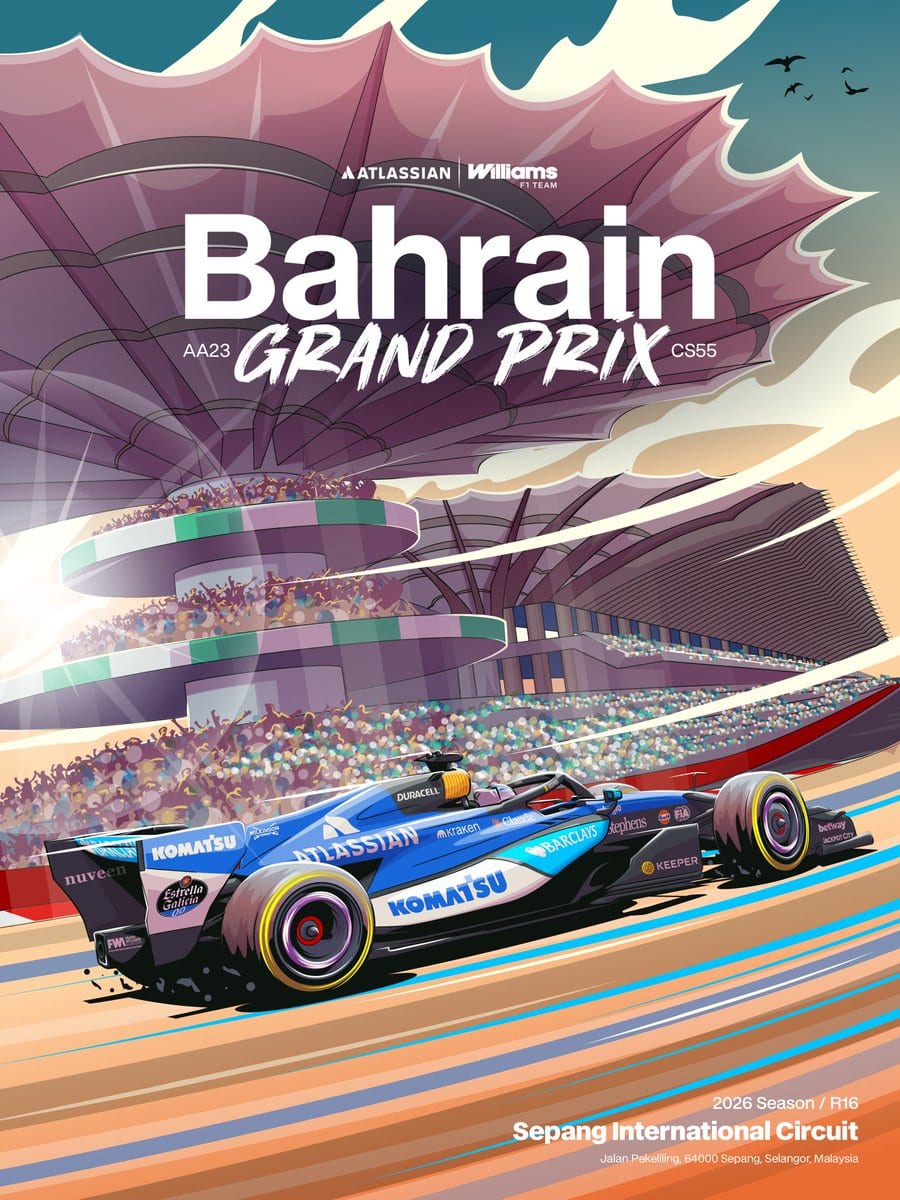
Source: Official Team Post via X
Drivers Anticipate Unique Challenges at Sepang's Return to F1
As Formula 1 returns to Sepang, drivers prepare for the track's abrasive surface and potential wet conditions. The weekend promises strategic variety with tire management and possible rain adding layers of complexity.
After a nine-year hiatus, the Sepang International Circuit is set to host a Formula 1 race again, and drivers are gearing up for a weekend that promises to be anything but dull. The track, well known for its abrasive surface, could turn tire management into a key strategic element, with the likelihood of multiple pit stops keeping teams on their toes.
For many drivers, this will be their first real encounter with Sepang, having only experienced it through simulators or on television. The veterans, meanwhile, will be reacquainting themselves with the circuit's challenging nuances. Regardless of experience, the consensus is clear: Sepang's rough surface will test tire endurance to the limit.
Carlos Sainz, who races for Williams, is hoping that the tire degradation will add an element of strategy that recent races have lacked. "It's been a few weekends now with zero deg," Sainz said. "It makes the racing less driver-dependent. So I wouldn't mind seeing a bit of deg." Oscar Piastri echoed this sentiment, likening the track surface to sandpaper and predicting a challenging weekend ahead.
Kimi Antonelli, currently leading the World Championship, expects a stark contrast to recent races with minimal tire degradation. "It's going to be completely different," the Mercedes driver noted. "I just did the track walk, and it's the roughest track tarmac that I've seen." He foresees a race with two or three pit stops due to both the abrasive surface and the heat.
The long straights of Sepang should allow for plenty of overtaking, but Antonelli's teammate, George Russell, warns that tire overheating could complicate matters. "Surface overheating is going to be a huge thing," he explained, suggesting it could make it harder for drivers to stay close and re-attack after overtaking.
Adding to the complexity is the high chance of rain, with Sepang's notorious weather promising to shake things up further. This year, the F1 calendar has largely dodged wet races, leaving many drivers without experience in the 2026 cars under such conditions. Ferrari and Red Bull have conducted some Pirelli testing, but others like Lando Norris are bracing for a new experience. "I've not driven in the wet in this car," Norris admitted, emphasizing the need for preparation.
The rain isn't just about tire grip; it's also a test of power unit management. "It's a good test for sure," said Sainz, noting the challenges posed by downshifts and power variability. Antonelli, however, sees a silver lining in the abrasive surface, which could help with water drainage and reduce the risk of aquaplaning.
Whether it's tire management or dealing with potential downpours, this weekend at Sepang will demand adaptability and strategy from the drivers and teams. With so many variables in play, the race promises to be a fascinating spectacle for fans and a tough yet intriguing challenge for the teams.