
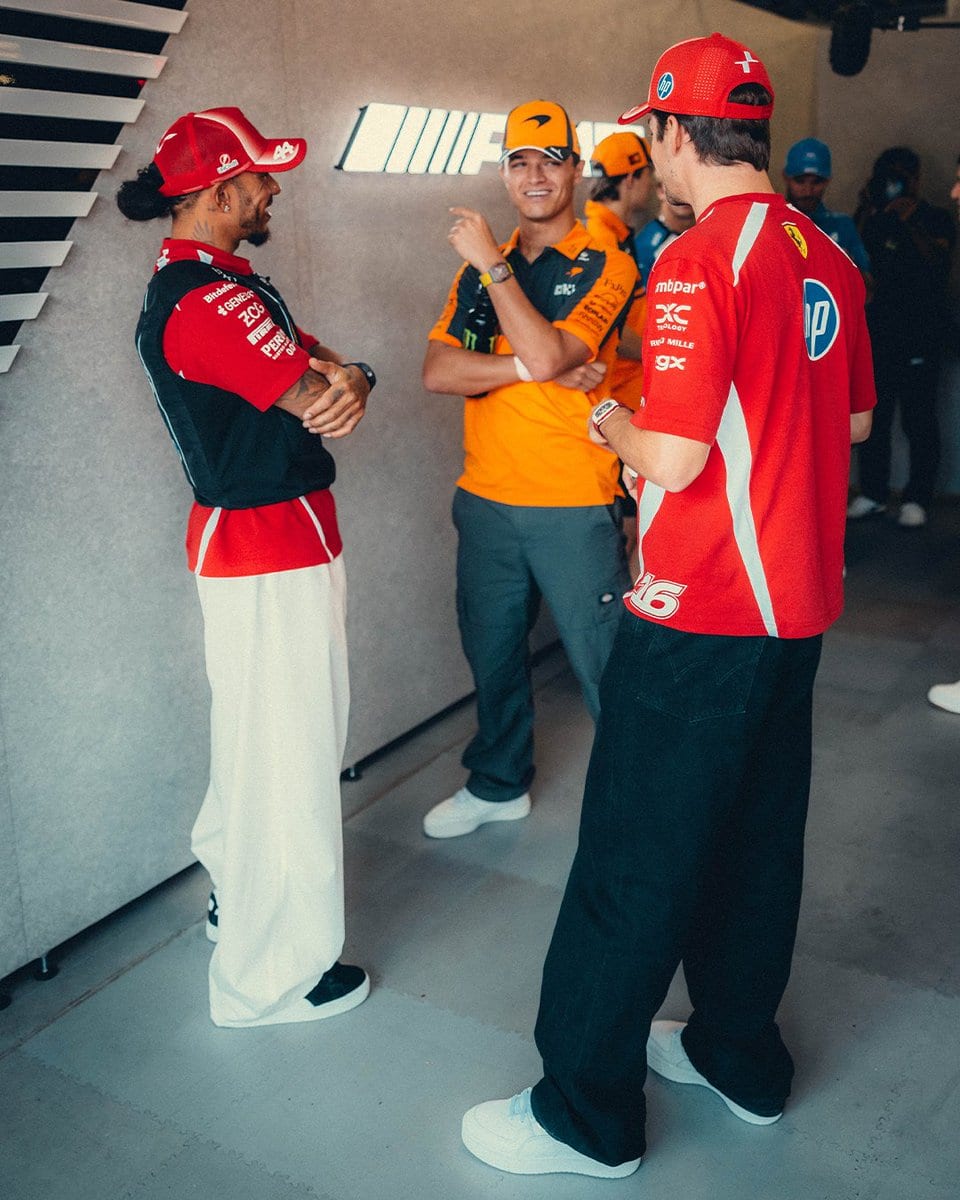
Source: Official Team Post via X
Navigating the Altitude: Strategies and Challenges at the Mexico City Grand Prix
The Mexico City Grand Prix at Autodromo Hermanos Rodriguez presents unique challenges due to its high altitude, affecting car performance and strategy. Teams and drivers must adapt to lower air density, which impacts cooling and downforce, making strategic decisions crucial for success.
Formula 1 is often about making split-second decisions that can alter the course of a race. The Mexico City Grand Prix, held at the Autodromo Hermanos Rodriguez, demands even more from teams, drivers, and strategists due to its unique conditions. This circuit, located 2,250 meters above sea level, creates a challenging environment where the usual rules of racing are turned on their head.
The high altitude in Mexico City results in approximately a 20% reduction in air density, which affects downforce and cooling potential. While turbo engines mitigate power loss compared to their naturally aspirated predecessors, they must work harder, leading to an attrition-heavy race. To cope, cars are fitted with larger brake ducts and more open bodywork to maximize airflow and cooling, albeit at the cost of increased drag.
In terms of strategy, the Mexico race is known for its complexity. Overtaking is difficult, and teams often opt for one-stop strategies. However, the nuances of tire degradation and track evolution can make or break a race. Charles-Antoine Florentin, Williams' Head of Race Strategy, explains that overreacting to Friday's practice data is a common pitfall, as the track's grip improves significantly over the weekend.
Florentin highlights the importance of balancing qualifying and race pace, especially given the cooling challenges posed by the altitude. Predicting how much time a car spends in traffic is crucial for setting the right cooling levels, as running in another car's wake can exacerbate overheating issues.
The removal of DRS in 2026 further complicates overtaking, with teams instead relying on additional electrical energy to assist during straights. This change, combined with the long main straight, will see drivers maximizing their energy deployment into Turn 1.
Tire strategy also plays a pivotal role. The 2025 season saw a shift to more durable tires, reducing graining and overheating issues, which are typically exacerbated by Mexico's thin air. This year, with the return to consecutive compounds (C3, C4, C5), a medium-to-hard strategy could be effective, though the soft tire remains a contender.
Sergio Perez, celebrating his 300th race start at his home Grand Prix, underscores the significance of minimizing tire sliding due to the reduced downforce, emphasizing rhythm and precision for a successful lap.
A key section of the track is the Foro Sol stadium area, where cars navigate a low-speed sequence of corners amidst a cacophony of noise. This section is critical for lap time, particularly in qualifying, where managing tire temperatures is vital.
Looking back, the 1968 Mexican Grand Prix is remembered for its dramatic three-way title fight, ultimately won by Graham Hill. More recently, in 2023, Lando Norris demonstrated strategic brilliance with McLaren, climbing from 17th to 5th through a calculated approach to tire usage and track position.
The Mexico City Grand Prix remains a race of contrasts—between speed and strategy, risk and reward—where the high altitude and fervent fans add an extra layer of complexity to an already demanding sport.