
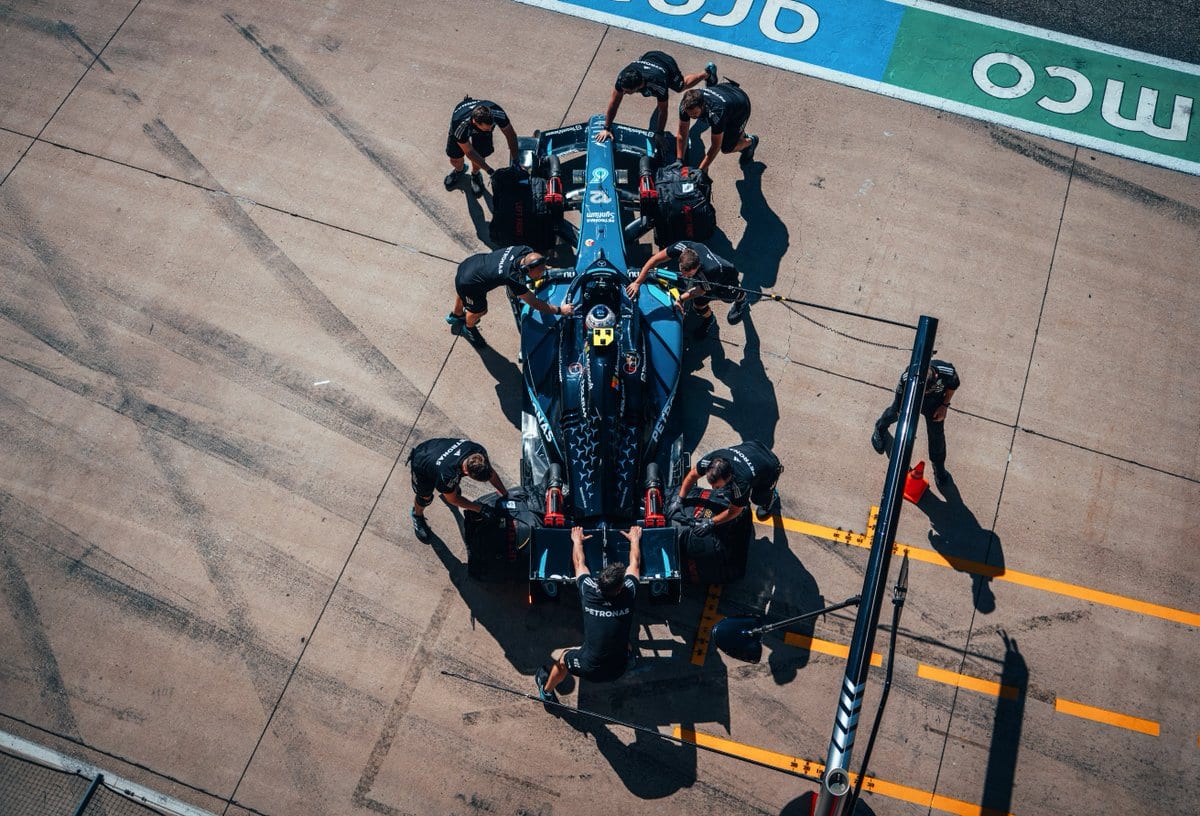
Source: Official Team Post via X
Toto Wolff Reveals Why Mercedes Skipped Drive to Survive's Debut Season
Toto Wolff has explained why Mercedes opted out of Netflix's Drive to Survive during its first season. According to Wolff, competing for the championship took precedence over participating in a documentary.
Toto Wolff has finally shed light on why Mercedes chose to sit out the first season of Netflix's acclaimed F1 series, Drive to Survive. Back in 2018, both Mercedes and Ferrari were notably absent from the documentary that chronicled the Formula 1 season.
The series has been praised for boosting F1's popularity by presenting the sport in a dramatic, easily digestible format. However, its inaugural season went ahead without the involvement of the title-contending teams, Mercedes and Ferrari, meaning drivers like Lewis Hamilton, Valtteri Bottas, Sebastian Vettel, and Kimi Raikkonen were nowhere to be seen.
Wolff explained on the Cheeky Pint podcast that Mercedes had its reservations. "There are some shows that I personally found quite okay. The cycling was okay. But why?" Wolff questioned. He continued, "I didn’t believe it would work. Back in the day, when Formula 1 pitched it to us, Netflix didn’t really pay any money—very little—and we were fighting a world championship against Ferrari."
Wolff even consulted with then-Ferrari chief Maurizio Arrivabene, who shared his view: "We are here to win a Formula 1 championship and not play Cirque du Soleil." Thus, both teams famously opted out of the series' first run.
Over time, drivers like Max Verstappen and Lando Norris have voiced their dislike for the way the show sometimes manufactures drama. This criticism has not gone unnoticed, and the producers have made efforts to address these concerns in later seasons.
While Mercedes and Ferrari's absence might have been a blow initially, it allowed the spotlight to shine on smaller teams, such as Haas, and personalities like their former boss, Guenther Steiner, who became fan favorites. Wolff acknowledged this could have been crucial for the series' success. "It allowed Drive to Survive to look at smaller teams and underdog teams," he noted.
The COVID-19 pandemic also played a role. As people stayed home, the series reached a wider audience. "Generations watched Drive to Survive from the grandchild to the grandparent," Wolff said, adding that F1's ability to continue racing made it the only sport live at the time, further expanding its audience.
According to Wolff, the sport's current strength is not solely due to Netflix. "We entertain. We have great characters that are very active on social media, younger drivers. We provide great narratives, controversial situations, the politics outside of the sport. That is basically a 12-month live reality show," Wolff concluded.