
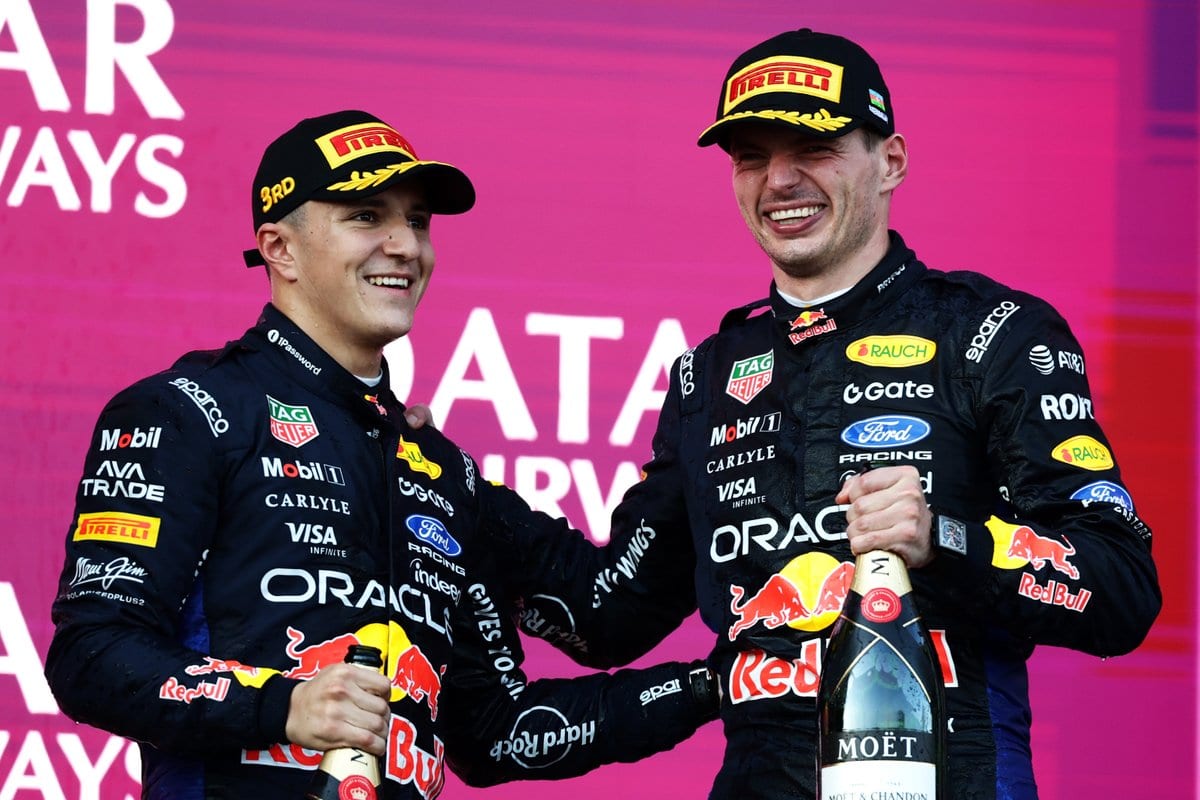
How Isack Hadjar's Team Orders Boosted Verstappen to Second in Baku
In Baku, Max Verstappen's ascent from eighth was aided by team orders involving Isack Hadjar. The Red Bull duo's strategic swap helped Verstappen secure second place.
Max Verstappen's climb from an eighth-place start in Baku to a second-place finish was not without its strategic maneuvers, thanks in part to his teammate Isack Hadjar. The Dutch driver found himself in a bit of a quandary when he moved into third place, overtaking Hadjar. It was then that Verstappen realized he had an issue that could have derailed his podium ambitions.
Verstappen's impressive progression from the middle of the pack was a testament to the potential he believed was missing in qualifying. Engine problems and untimely yellow flags had left him lower on the grid than desired. By lap 7, Verstappen had outpaced Hadjar, prompting the team to issue orders for Hadjar to let Verstappen through. This swap was crucial, especially after Verstappen had already dispatched McLaren's Lando Norris with relative ease earlier in the race.
With the path cleared, Verstappen set his sights on the leaders, including Oscar Piastri, to position himself for a shot at race leader George Russell. While overtaking Piastri was expected, Russell's eventual victory left Verstappen to settle for second—a result undoubtedly aided by Hadjar's willingness to play the team game.
The dynamics between the Red Bull teammates in Baku highlight the strategic depth teams often employ to maximize their race results. Hadjar’s compliance with team orders was instrumental in Verstappen's successful race, reinforcing the importance of teamwork in the often individualistic world of Formula 1.