
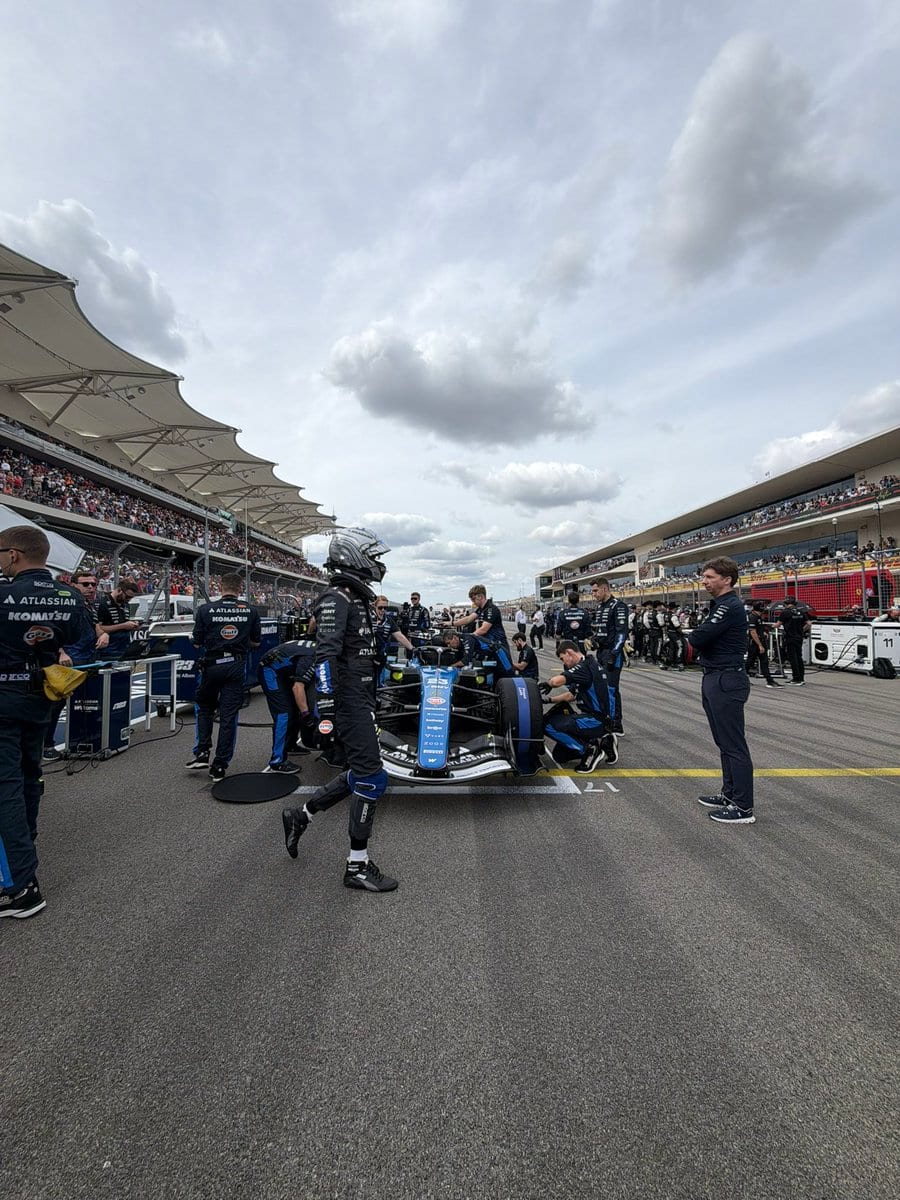
Source: Official Team Post via X
Williams Boss Vowles Critiques F1's Cost Cap Impact on Competition
Williams' James Vowles argues that the current F1 cost cap favors top teams and stifles competition. He calls for a reevaluation to prevent predictable race outcomes and ensure a healthier sport.
According to Williams boss James Vowles, Formula 1 is not quite the picture of health it ought to be, and he lays the blame squarely on the cost cap. Introduced in 2021 to level the financial playing field, the cap seems to have instead bolstered the top four teams, while leaving others, like Williams, in the dust. Vowles has been vocal about this imbalance, noting that his team is grappling with "30 years of underinvestment" and can't afford to divert funds from the cost cap to build off-track capabilities and still stay competitive on the circuit.
Not everyone shares Vowles' concerns. Racing Bulls' Alan Permane, for instance, recently suggested that teams can indeed boost their capital expenditure, claiming it can be offset against the cost cap over the years. However, Vowles remains skeptical, urging Permane to acknowledge the on-track reality.
Vowles points out that before the cost cap, teams outside the top four scored significantly more points. "About 10% of the podiums were claimed by teams ranked P5-10," he explained. Now, that figure has dwindled to a mere 5%, with only one non-top-four team winning in the last 130 races. That lone victory? Sergio Perez's 2020 Sakhir Grand Prix win for Racing Point—a result Vowles cheekily takes partial credit for.
The Williams boss argues that the cost cap has inadvertently widened the gap among teams. "The top four are thriving while others, including Aston Martin and us, are investing more than ever before," Vowles said. He noted that previous strugglers like Williams and Force India simply lacked the funds to compete at higher levels.
Vowles questions whether he'd have the same stance if he were still at Mercedes, a team that recently clinched the 2026 title double. He acknowledges that figures like McLaren's Zak Brown and Mercedes' Toto Wolff will naturally protect their teams' interests. Yet, he poses a wider question: "Is the sport healthier when outcomes are predictable? The top eight are set in stone; that's not what competition should look like."
The solution, according to Vowles, lies in proactive dialogue within the F1 Commission, a forum where teams meet several times a year to debate the sport's direction. While these meetings can turn combative, Vowles finds them constructive. He believes the sport should aim for changes by the next regulatory overhaul, expected around 2030. "We need to start planning by 2028 and 2029 to make these changes effective," he stated, conceding that a quick fix isn't feasible but emphasizing the importance of starting the conversation now.