
Source: Official Team Post via X
Verstappen Shrugs Off Ferrari 'Nonsense' Comments
Max Verstappen and Charles Leclerc dismiss claims that the Red Bull driver could have won the Singapore Grand Prix by a larger margin if he had been in a Ferrari. Both drivers, along with Lewis Hamilton, regard the debate as trivial.
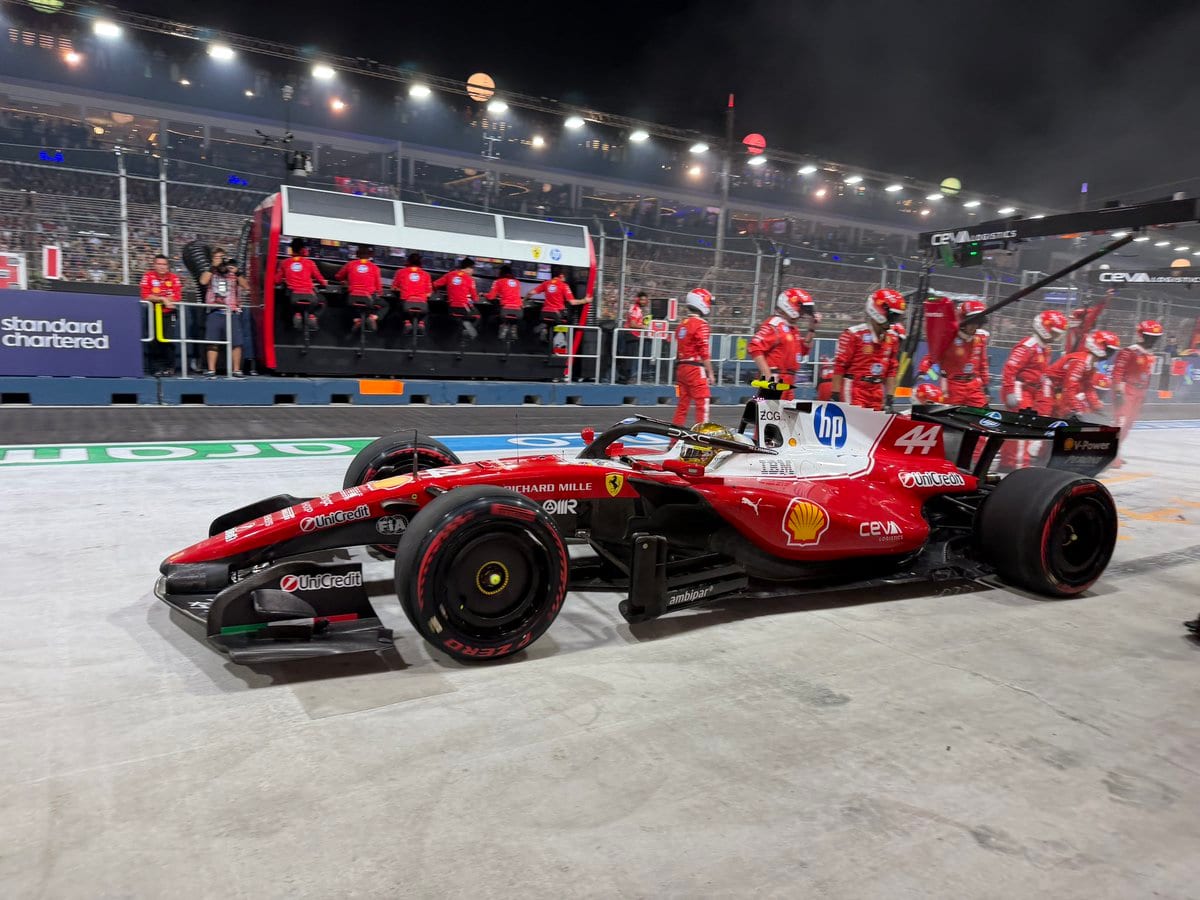
Max Verstappen recently found himself amidst a lively debate about Ferrari's potential pace at the Singapore Grand Prix. Red Bull's Isack Hadjar stirred the pot by suggesting that Verstappen would have claimed victory by a larger margin if he had been behind the wheel of a Ferrari, which he deemed the fastest car on the day. However, both Verstappen and Charles Leclerc brushed off this speculation as "nonsense."
Having secured pole position at Marina Bay with a mere 0.05 seconds advantage over Leclerc, Verstappen went on to win the race by seven seconds. Despite this, the conversation around Ferrari's performance persisted.
Leclerc was quick to dismiss Hadjar's claim, labeling it as unfounded. "It's nonsense to start saying these kinds of things," he remarked, pointing out that neither he nor Hadjar truly knows the intricacies of each other's cars.
Lewis Hamilton also weighed in, acknowledging the differing opinions but not lending much weight to the discussion.
When Verstappen was asked for his thoughts during a media session at the Circuit of the Americas, he was equally dismissive. "It’s a fun debate," he said, but questioned its relevance. "We’re stressing about something that doesn’t matter, right?" he added, indicating his preference to let such comments slide without further agitation.
Verstappen admitted that Ferrari was indeed fast during the race, but downplayed the notion of his qualifying lap being anything out of the ordinary. He emphasized that he felt good with his Red Bull, and without having driven a Ferrari, he couldn't comment on its performance. "That’s why these debates are just nonsense," he concluded.
The exchange highlights the sometimes speculative nature of performance debates in the paddock, with drivers often preferring to focus on their own performances rather than hypothetical scenarios.