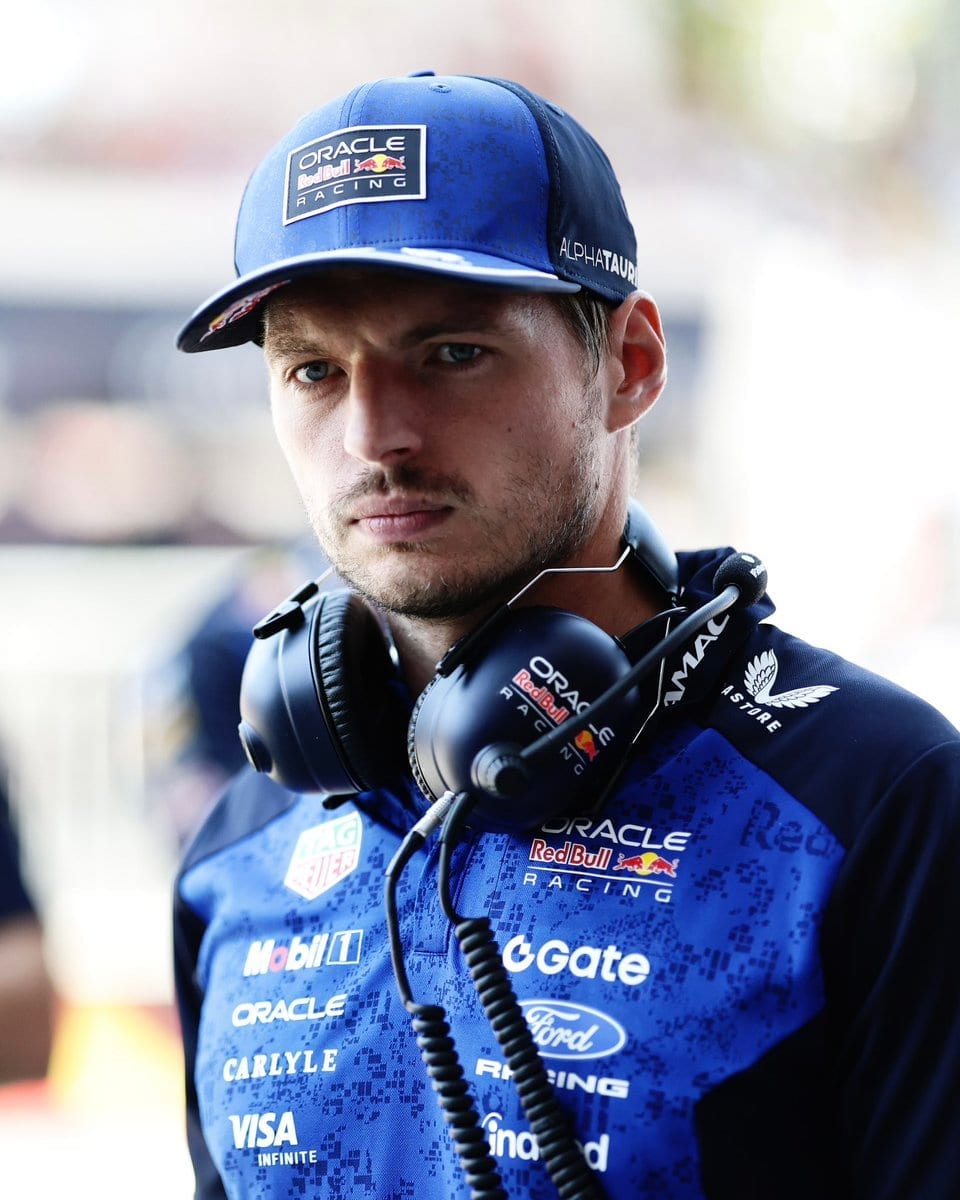
Source: Official Team Post via X
Christian Horner Unveils Red Bull's Verstappen-Centric Approach
Christian Horner has unveiled the challenges behind managing Red Bull's second seat, citing Max Verstappen's unique demands. This focus has shaped the team's engineering choices and continues to affect drivers like Isack Hadjar.
Christian Horner, the former Red Bull Racing team principal, has opened up about the long-standing challenges faced by drivers sharing the garage with Max Verstappen. Revealing insights from a crucial discussion back in 2022 with Verstappen's management, Horner highlighted how the Dutchman's specific requirements have influenced the team's approach over the years, impacting the second seat at Red Bull.
Reflecting on a demand from Verstappen's camp during the 2022 Azerbaijan Grand Prix, Horner noted the complexities brought about by Verstappen's exceptional talent. This, combined with the team's facilities at the time, made it difficult for any teammate to keep up. Horner suggests that Isack Hadjar, the current occupant of the second seat, still experiences this dynamic.
The challenge of partnering Verstappen has been a recurring theme at Red Bull. Drivers like Pierre Gasly, Alex Albon, and Liam Lawson struggled to maintain their positions, while Sergio Perez, despite a commendable stint, eventually exited after the 2024 season. On the High Performance Podcast, Horner was asked about his management of the second Red Bull seat during his tenure, and he candidly admitted to mixed results.
Horner recounted the era when Daniel Ricciardo and Verstappen were teammates, explaining that their early competitive balance shifted as Verstappen's demands grew. "Max is tremendously demanding," Horner explained, noting Verstappen's unusual skill in managing a car with a strong front end, a trait that has dictated the team's development focus.
In a previous podcast, Perez mentioned Horner had told him they race with two cars because they have to, a statement Horner disputed. Instead, Horner shared a revealing conversation with Verstappen's management about Perez's role. Early in 2022, both Red Bull drivers seemed potential title contenders, but Verstappen eventually dominated.
Horner recalled telling Perez, "This team is geared around trying to win a world championship with Max as the lead driver." Perez was eager to sign up for this role, seeing it as a rare opportunity to drive for a top team.
Horner also pointed out Alex Albon's contribution to developing the 2022 car, which initially suited Perez's driving style better. This led to both Red Bull drivers winning early races that season, but Verstappen's management soon pressed for adjustments to better fit Verstappen's style.
"Max is the prime asset," Horner stated, acknowledging that engineering naturally focuses on the driver most likely to succeed. This focus exposed some weaknesses in Red Bull's tools, such as their wind tunnel and simulation capabilities.
Despite these engineering challenges, Horner praised Hadjar's performance in the 2026 season. The young French driver has consistently scored points, securing his place alongside Verstappen for 2027. This continuity suggests Red Bull has found a balance, at least for now, in managing the demands of their star driver and developing the car to suit the team as a whole.