Source: Official Team Post via X
Toto Wolff Reflects on Mercedes' W17 Trials in Singapore
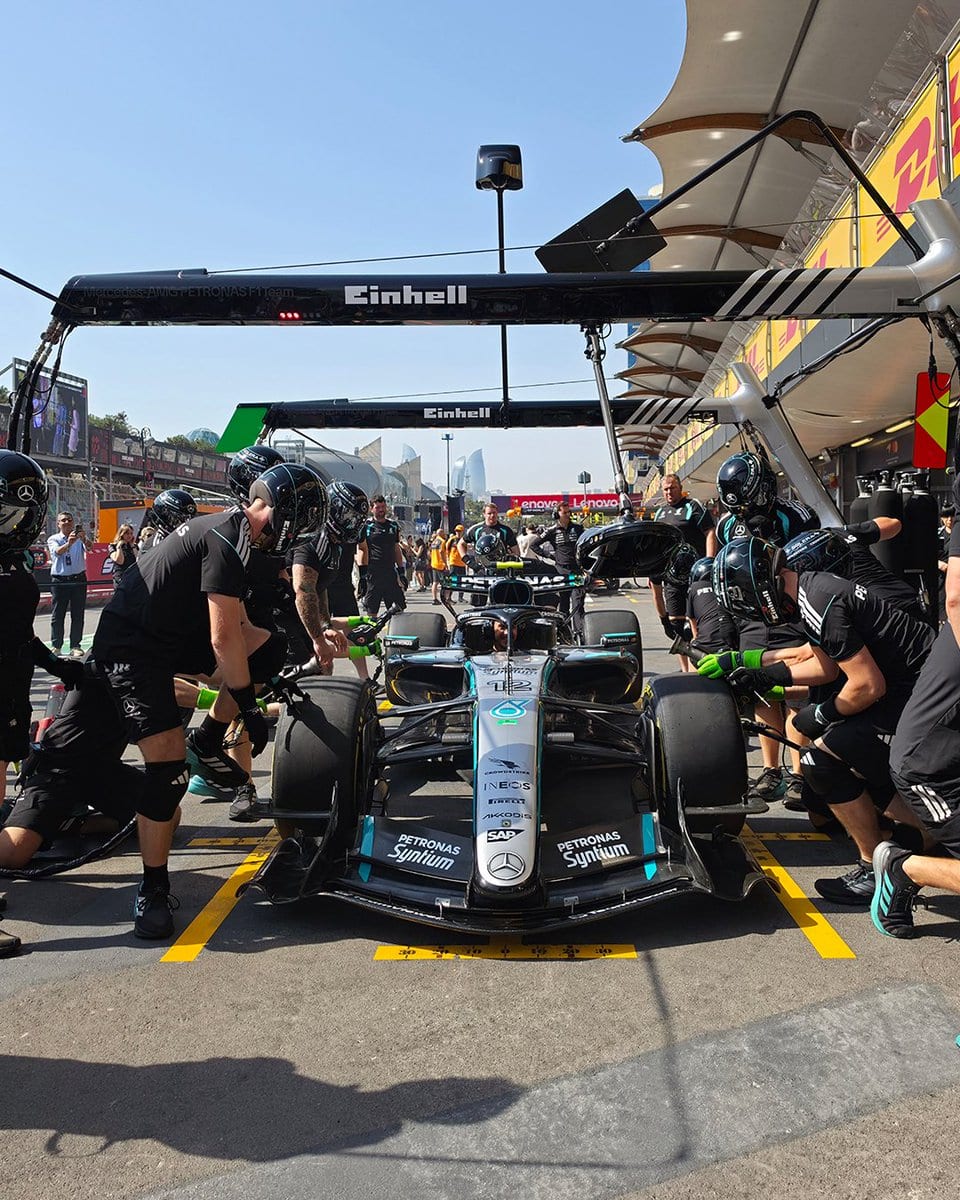
Toto Wolff has shared insights following Mercedes' experimental run with the W17 during the Singapore GP weekend. The team is comparing different car specifications to refine their development strategy for future seasons.
In Singapore, Mercedes' team principal Toto Wolff opened up about the team’s experimental approach during the weekend, which involved drivers Kimi Antonelli and George Russell testing different specifications of the W17. This strategy is part of Mercedes' ongoing evaluation of their recent upgrades, aiming to fine-tune their approach for upcoming seasons.
Despite a strong season with Mercedes leading the Constructors’ Championship and Antonelli and Russell sitting atop the Drivers’ standings, the team faced challenges in Malaysia after introducing a significant upgrade package. Both drivers struggled for pace, with Russell eventually sidelined by a power unit failure despite being in a podium position.
For the Singapore GP, Russell, facing a grid penalty, opted to revert to an older car specification to compare its performance against the new updates. Wolff explained, "There is a pattern, but most importantly, we need to dissect what works and what doesn't across both specs to chart a path forward."
While running two different car setups is less than ideal, Wolff acknowledged it as a necessary compromise. "We have two test pilots for now, and we need this to ensure we’re on the right path for next year," he noted.
Pressed about the patterns emerging from their tests, Wolff mentioned that the newer car appeared more challenging to drive. "Not necessarily slower, but perhaps we haven’t managed to put it all together yet. The older car is more stable and offers better grip, but we need more data to draw firm conclusions," he added.
The insights gained from this weekend's tests are crucial for shaping Mercedes' 2027 chassis development. Wolff emphasized the importance of these findings, stating, "We’ve invested months into these upgrades, and they point in a promising direction, but we may need to adjust to truly capitalize on them for 2027."