
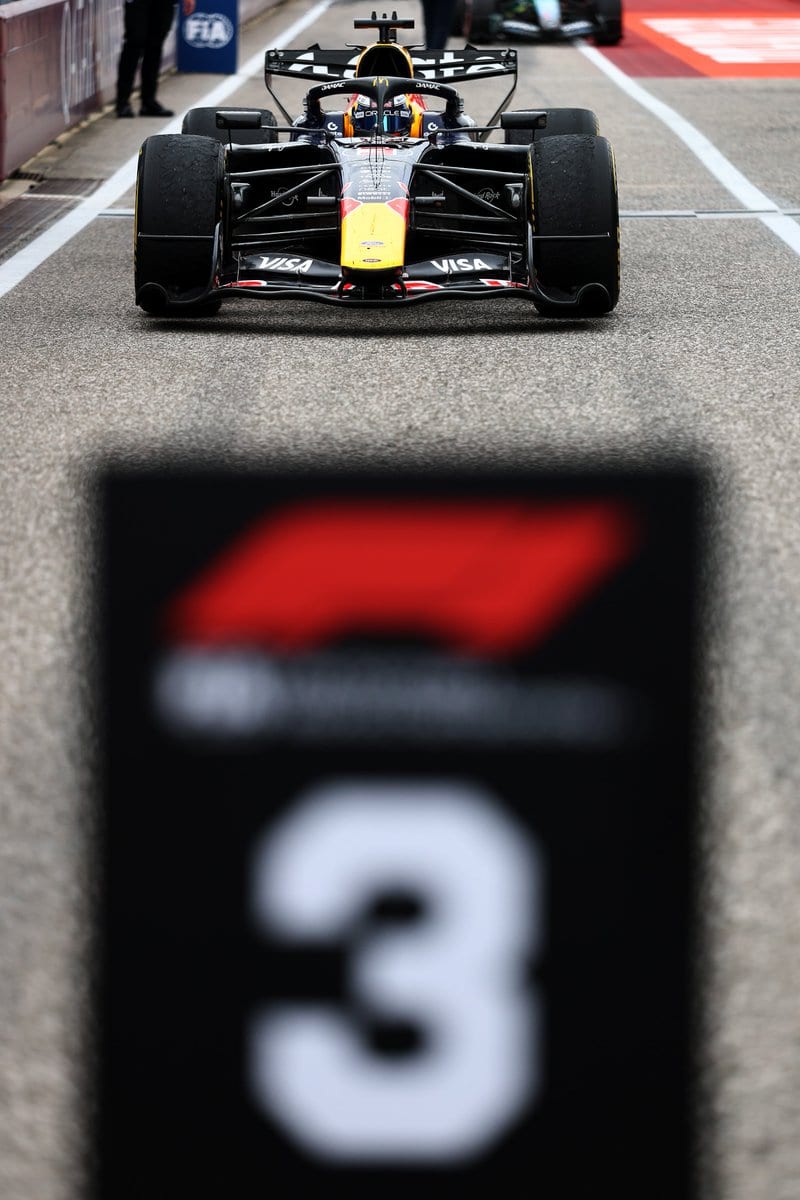
Source: Official Team Post via X
Verstappen Challenges COTA Owner's 'Dip' Defense Over Track Bumps
Max Verstappen has criticized COTA owner Bobby Epstein's dismissal of track bumps as mere 'dips', suggesting Epstein would struggle after a few laps in an F1 car. Verstappen and other drivers have expressed concern about the impact of the track's surface on their bodies.
Max Verstappen isn't one to mince words, especially when it comes to the bumps at the Circuit of The Americas (COTA). Responding to Bobby Epstein's remarks that the track's irregularities are just 'dips', Verstappen quipped that Epstein 'wouldn't be able to walk' if he tried five laps in a Formula 1 car. The Red Bull driver, along with several of his peers, has been vocal about the discomfort and potential long-term effects of racing on such a bumpy surface.
During the recent race weekend, drivers like Gabriel Bortoleto and Charles Leclerc echoed similar sentiments, labeling the track as 'below F1 standards' and 'poor'. Carlos Sainz pointed specifically to Turn 1 and Turn 19 as particularly problematic. Verstappen went further, revealing the physical toll the bumps have taken on him, citing impacts with over 9G force on his spine.
COTA owner Epstein, however, was unconvinced by these criticisms. In an ESPN interview, he downplayed the concerns, insisting that these were merely dips and that the track, apart from a bump at Turn 1, was in good shape. He added that World Endurance Championship drivers had not reported any issues.
Verstappen was unimpressed by Epstein's remarks, suggesting that the American would struggle after just a brief stint in an F1 car on the track. Verstappen pointed out significant bumps between Turns 4 and 5, arguing that such impacts should not be expected at high speeds.
Verstappen, who secured third place in the race behind Kimi Antonelli and Charles Leclerc, admitted to relying on painkillers over the weekend, a rarity for him. Lando Norris also shared his discomfort, mentioning the need for headache tablets due to the jarring nature of the track.
While drivers continue to voice their concerns, it seems the dialogue between them and track management remains at an impasse, leaving little hope for immediate resolution.