
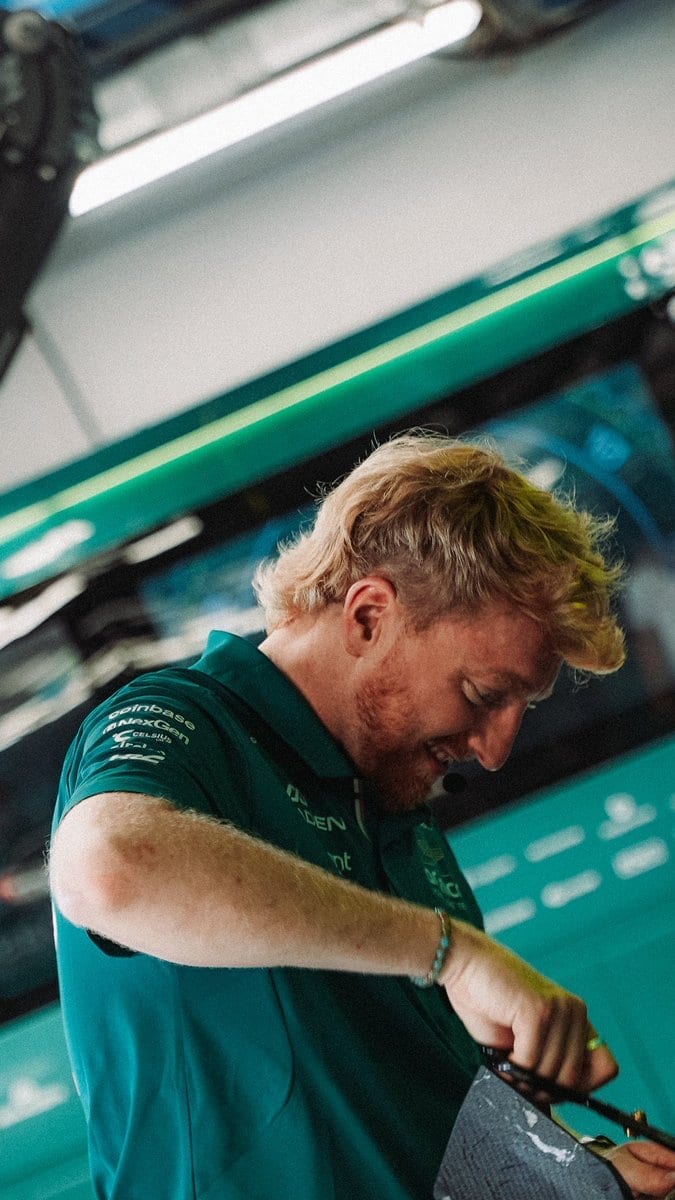
Source: Official Team Post via X
Honda's Turbocharger Fails to Solve Aston Martin's Turbo Lag Woes in Singapore
Aston Martin's struggles with turbo lag persisted at the Singapore Grand Prix despite Honda's introduction of a new turbocharger. The unique circuit layout and energy conditions left the team grappling with driveability issues.
Honda's attempt to address turbo lag issues with a new turbocharger at the Singapore Grand Prix didn't quite hit the mark, according to Shintaro Orihara, Honda’s technical lead. Despite the high expectations following Fernando Alonso's strong finish in Malaysia, Aston Martin found themselves back to grappling with familiar problems in Singapore. The circuit's layout and energy conditions thwarted Honda's efforts to mitigate turbo lag, leaving drivers Alonso and Stroll struggling with acceleration inconsistencies and driveability issues.
After a dismal qualifying session where both drivers failed to progress past Q1, Aston Martin decided to make setup changes, which meant they had to start from the pitlane. Alonso ended up finishing 16th, while Stroll retired early due to a clutch problem. Post-race, Honda shipped their power units back to their base in Sakura, Japan, for a thorough inspection. Orihara explained that the turbocharger, despite being a new introduction, couldn't overcome the challenges posed by Singapore's unique demands.
Orihara mentioned that the turbo lag resulted in unstable acceleration, causing discomfort for the drivers. The circuit’s energy-rich nature, which typically aids in battery energy recovery, wasn't enough to counteract the turbo lag. Honda has taken lessons from this experience, with plans to implement countermeasures for future races.
The issue of turbo lag isn't entirely new to Honda, and Orihara noted that while using the MGU-K could help mitigate the lag, it’s not a panacea. The energy-rich circuits like Singapore limit their ability to harvest enough power to operate at high efficiency, further complicating efforts to manage turbo lag effectively.
Aston Martin's chief trackside officer, Mike Krack, reflected on the team's ups and downs, noting that the unexpected strong performance in Sepang had perhaps set unrealistic expectations. He emphasized the importance of learning from these fluctuations in performance and understanding the factors at play, especially given the limitations of their simulations in predicting the real-world impact of issues like turbo lag.
Krack acknowledged the emotional dynamics at play, with the team's performance in Sepang raising hopes that were dashed in Singapore. He stressed the need for the team to regroup, understand where they went wrong, and manage expectations more effectively going forward. Despite the setbacks, he remained optimistic about finding opportunities for better performances in upcoming races.